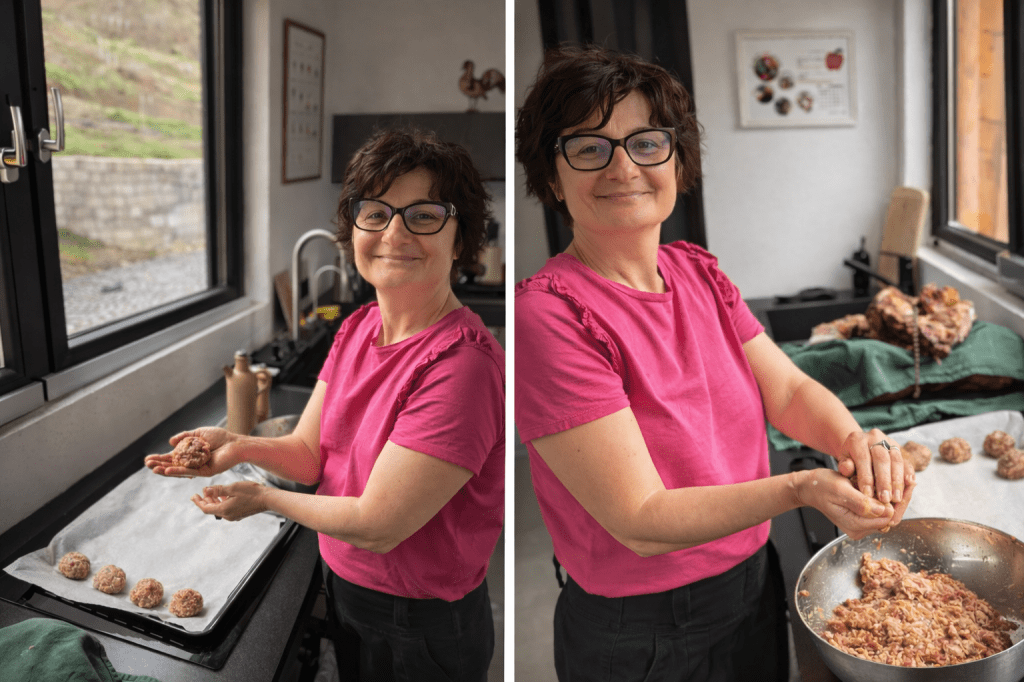
There is a moment in cooking when one more stir does not improve the soup.
It just keeps it from being served. I have been thinking about that a lot lately, not only in the kitchen, but in work too. In projects. In feedback. In the strange dance between wanting something to be good and never quite feeling ready to let it go.
Most of us were taught that attention to detail is a virtue. And often, it is. Good feedback can make work clearer, sharper, more useful. It can save us from blind spots. It can protect quality.
But sometimes what looks like care is something else wearing a clean shirt.
Sometimes feedback helps the work.
Sometimes feedback protects us from the discomfort of finishing it.
That is the line I want to talk about.
Because I think many entrepreneurs, freelancers, consultants, and teams get stuck there for longer than they realize.
Why feedback can be useful and dangerous at the same time
A pinch of salt can wake up a whole dish.
An entire handful can ruin it.
Feedback works the same way.
The right note, at the right moment, can lift the work. It can help you see what is unclear, what is missing, what needs simplification, what your audience may not understand yet.
But when feedback becomes endless, hyper-detailed, or disconnected from the real goal of the work, it stops being seasoning.
It becomes overhandling.
And overhandling has a cost.
It cools momentum.
It creates hesitation.
It makes creators doubt things that were already good enough to move forward.
It turns work into something that is constantly revised but rarely released.
This is especially common when perfectionism is nearby.
Not the loud, obvious kind. The polite kind. The intelligent kind. The kind that sounds like standards, professionalism, and excellence.
The kind that says, “Let’s just refine this a little more.”
The real question is not “Is the feedback right?”
The more helpful question is:
What is this feedback helping us do?
Is it making the work clearer, stronger, more coherent, more relevant?
Or is it creating one more loop before someone has to publish, decide, approve, present, launch, or commit?
That is where the boundary lives.
Good feedback helps the work move forward.
Delay disguised as feedback keeps the work in the kitchen long after it is ready to leave the stove.
Feedback and perfectionism in entrepreneurship and freelance work
If you are an entrepreneur, freelancer, or independent consultant, this matters a lot.
You create something. A proposal. A workshop. A post. A landing page. A visual. A service description. A presentation.
Then feedback comes in.
Sometimes it is helpful. But sometimes it arrives as a long list of small preferences, edge cases, hypothetical concerns, stylistic micro-corrections, or vague discomfort that no one can quite name clearly.
And because none of it is completely wrong, it becomes hard to ignore.
So you go back in.
You edit more.
You soften something.
You add something.
You explain more.
You make it safer.
You make it tidier.
You make it more approved.
And slowly, the original energy of the work starts to fade.
This is how many good ideas lose their heat.
Not because they were bad.
Because they were kept too long in revision mode.
Sometimes the work did not need another round of tasting.
It needed to be served.
Why teams often get stuck in feedback loops
This does not only happen to solo professionals.
Teams do this beautifully too.
In many teams, feedback becomes a quiet way of performing competence. People start building their value around being the one who spots what is off. The inconsistency. The weak phrase. The missing detail. The possible risk. The little thing others missed.
And yes, that can be useful.
Every kitchen needs someone who notices when the oven is off or the dish is undercooked.
But if everyone becomes a critic and nobody becomes a finisher, the meal never reaches the table.
That is when teams become excellent at reviewing and surprisingly weak at shipping.
The work gets smarter internally and weaker externally.
Not because people do not care.
Because critique feels safer than commitment.
Why finding flaws can feel safer than moving forward
Creating is vulnerable.
Approving is vulnerable.
Publishing is vulnerable.
Saying “this is good enough, let’s go” means you now have to live with real reactions, real users, real consequences, real imperfection.
Critique offers distance.
The person giving feedback stays slightly above the work instead of inside the risk of releasing it.
That is why over-analysis can look rational while being deeply emotional underneath.
It often sounds like this:
- We just want to make sure it is right.
- There are still a few things to polish.
- I care about quality.
- Let’s think it through once more.
- I am only trying to help.
And sometimes that is true.
But sometimes those are more acceptable ways of saying:
- I do not feel comfortable letting this go.
- I do not want to be associated with something imperfect.
- I trust preparation more than reality.
- I feel safer critiquing than deciding.
That is why this is not only a work process issue.
It is often a fear issue dressed as thoroughness.
How to tell the difference between useful feedback and delay
Here is the simplest distinction I know:
Feedback is useful when it increases the value of the outcome.
Feedback becomes a delay tactic when it mainly postpones action, exposure, or decision.
That means feedback is worth taking seriously when it:
- improves clarity
- removes confusion
- strengthens the message
- better serves the audience
- prevents a meaningful mistake
- increases coherence
- makes the next step clearer
Feedback is less useful when it:
- adds extra rounds without meaningful improvement
- focuses mainly on minor preferences
- avoids commitment
- protects ego more than quality
- makes the creator more hesitant, not more clear
- keeps the work unfinished without making it more effective
A simple test helps here:
After this feedback, do we know better what to do next?
Or do we simply feel less ready to move?
Good feedback sharpens action.
Bad feedback fogs it.
What to do when you receive feedback
If you receive feedback often, especially from clients, collaborators, or team members, it helps to sort it before reacting.
Not every note deserves the same weight.
I find it useful to separate feedback into three bowls.
1. Useful and actionable
This feedback improves the work in a real way. It adds clarity, relevance, strength, or coherence.
Use it.
2. Subjective but optional
This is preference, taste, or style dressed up as necessity.
Consider it, but do not surrender to it automatically.
3. Delay disguised as quality
This is where you get endless micro-adjustments, vague discomfort, or low-stakes details that create more process than progress.
Question it.
You are allowed to ask:
- What problem does this solve?
- Will the audience notice or care?
- Does this improve the result or just the comfort of the reviewer?
- Is this essential before launch, or can we learn it after launch?
That last question matters a lot.
Because many things people want resolved in theory can only be understood properly in reality.
Sometimes the market is a better editor than the meeting room.
What to do when you are the one giving feedback
If you are part of a team, or you review other people’s work often, this is where self-awareness matters.
Before giving feedback, ask yourself:
- Am I improving the work or displaying my standards?
- Is this important to the outcome or only visible to me?
- Would I still mention it if we had to publish in one hour?
- Is this a real risk or my discomfort with imperfection?
- Have I offered a solution, a decision, or only another loop?
Good feedback is not a treasure hunt for flaws.
It is a contribution to momentum.
The point is not to prove that you are sharp.
The point is to help the work become strong enough to live outside the room.
A better standard than flawless
I think many people get stuck here because perfectionism has very elegant manners.
It does not walk in shouting, “I am afraid.”
It walks in saying, “I have standards.”
And of course standards matter.
But real work does not become good only through protection. It becomes good through contact. With people. With use. With response. With friction. With reality.
At some point, the most mature sentence in a project is not:
“We can still improve this.”
It is:
“This is strong enough to move.”
Not careless.
Not lazy.
Not sloppy.
Just honest enough to understand that progress is not the enemy of quality.
Sometimes it is the only road toward it.
One question worth keeping close
The next time you receive feedback, give feedback, or feel yourself drifting into another round of refinement, ask this:
Is this making the result more valuable, or is it simply delaying the moment when the result has to exist?
That question has helped me more than any advice about perfectionism.
Because yes, some details matter.
But some details are just a way of keeping the soup warm forever, so nobody has to risk serving it.
And work, like food, is not meant to live its whole life in the pot.
Because in the end, many things do not need one more round of polishing. They need a clearer decision, a steadier hand, and the courage to meet reality.
I see this often in marketing too. People keep adjusting words, visuals, offers, pages, and plans, hoping that one more tiny improvement will finally make everything click. But sometimes the real issue is not the detail. It is the lack of clarity underneath it.
If your marketing feels stuck in loops, overthinking, or constant revision, this is often the work I help with: bringing more clarity to the message, more structure to the system, and a better sense of what actually deserves attention first.
Not more noise. Not more endless tweaking. Just clearer thinking, better choices, and work that can finally move.
That is usually where good marketing starts too.
If that sounds familiar, this is exactly the kind of work I do with founders and teams: helping them untangle what is unclear, spot what is overcomplicated, and build a marketing system that feels more coherent, more grounded, and easier to move forward with.
 Marketing, made clear
Lasă un comentariu